Tree Removal Plan for Piper’s Orchard
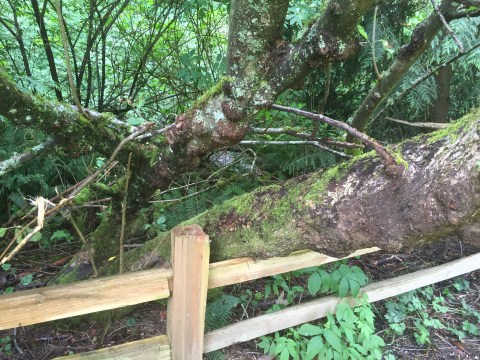
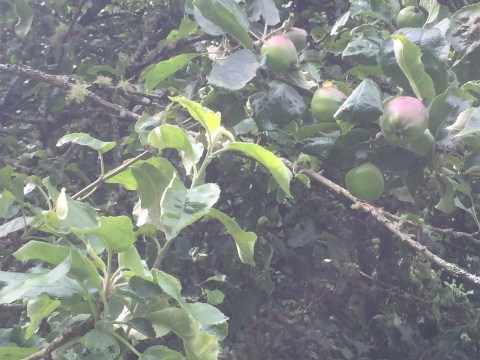
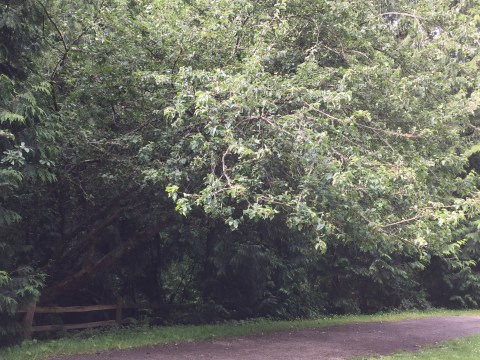
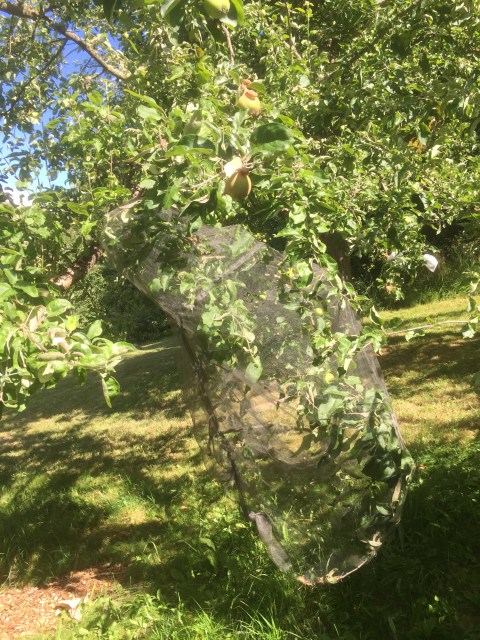
The historic Piper’s Orchard has over 70 trees. Some of these trees were planted in the 19th century by Andrew and Minnie Piper and represent heritage apple and pear trees that are still thriving even after 120 years. Many of the other trees in the orchard were planted by volunteers only 30 years ago, are not of historic importance and are badly diseased. These newer trees are disease-prone and are not contributing to the well-being of the orchard.
Specifically:
- The tree on the grid marked H2 is blighted by a condition that recognized state expert Dr. Robert Norton says will guarantee the tree will be stunted forever.
- The trees in grid spaces C4 and D6 are blighted with crippling cases of anthracnose.
- A copy of the orchard planting grid can be found here:https://pipersorchard.org/wp-content/uploads/2010/03/piper-orchard-map.pdf
Removing the orchard of these trees will:
- Improve the appearance of the orchard
- Reduce the anthracnose disease spores
- Make room for new and better transplants in these spaces in the future.
The decision to remove trees from Piper’s Orchard has been based on discussions between the volunteers who have been maintaining this orchard since 1983, members of the Seattle Tree Fruit Society and professional horticulturists. All concur that this would be a good decision to maintain the health and beauty of the orchard.
Although there are other existing trees that could be removed, the ones mentioned above are of particular decay disease.
After these trees are removed we would like to replace them with trees representative of the 19th century. In addition, there are spaces where trees died many years ago and we would like to continue planting replacements in Grid spaces B1, B2, G1, G6, H5 and H6.
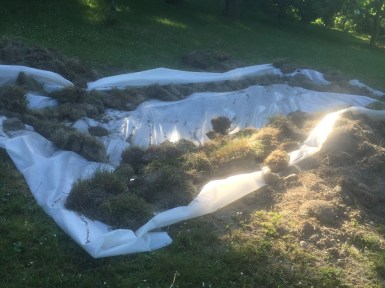
In order to provide soil that will help new trees survive we plan to test a solarization plan.
-composed by Don Ricks
Soil Solarization and Historic Tree Replacement at Piper’s Orchard
Background
A primary objective of historic orchard management is the replacement of vacant, dead or diseased trees with new trees of a rootstock and variety suitable to the character of the original planting. Unfortunately, new trees planted in an old orchard setting often suffer from Specific Apple Replant Disease (SARD), or “sick soil syndrome”. The causes of SARD are legion. Often a combination of viral, bacterial, metazoan, fugal and animal pests contribute to the presence of SARD. Despite its name, SARD can affect not only Pome fruit trees, but species of Prunus and Citrus as well.
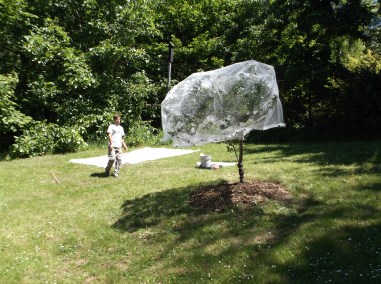
Soil solarization is chemical free, pesticide free, salmon friendly, and an organic method of controlling pests and soil borne plant pathogens (including fungi, bacteria, nematodes, insects and weeds) by mulching the soil and covering it with transparent plastic. This method is very low tech and low effort. It utilizes the greenhouse effect to disinfect soil via prolonged and repeated thermal treatments.
Method
- The area to be solarized is staked out.
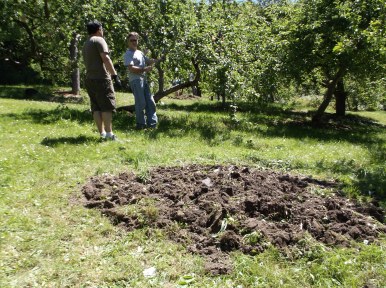
- The sod is broken either manually or by a tilling machine. Organic material is removed and composted.
- The soil is irrigated
- Two layers of clear plastic are spread over the tilled soil. The edges are secured by stakes, rocks, heaped dirt or a combination or the above.
- The soil remains covered through the late spring, summer and fall. In the winter, new fruit trees are planted in the sterilized soil.
Proposed Application in Piper’s Orchard
- Don Ricks will identify diseased trees, as well as vacant positions in the original orchard grid.
- Based on Don’s report, the Piper’s Steering Committee will reach a consensus on the area to be solarized.
- Solarization will begin in the spring of 2016
- Adam Wargacki will provide rootstocks to be planted in appropriate positions in the late winter, 2017. Adam and other Friends of Piper’s will provide grafting services. Two or more rootstocks may be planted at each position to account for inevitable loss of young trees by attrition (mishap, disease, animal predation etc.). Eventually the single healthiest tree will be left to occupy each position in the grid.
- Bob Baines will oversee varietal and rootstock selection, in order to preserve the integrity of the historic orchard landscape.
Sources
http://www.leicesters.co.nz/specific-apple-replant-disease/
http://www.thesaurus.com/browse/sterilization
Composed by: Adam Wargacki











 Friends of Pipers Orchard